
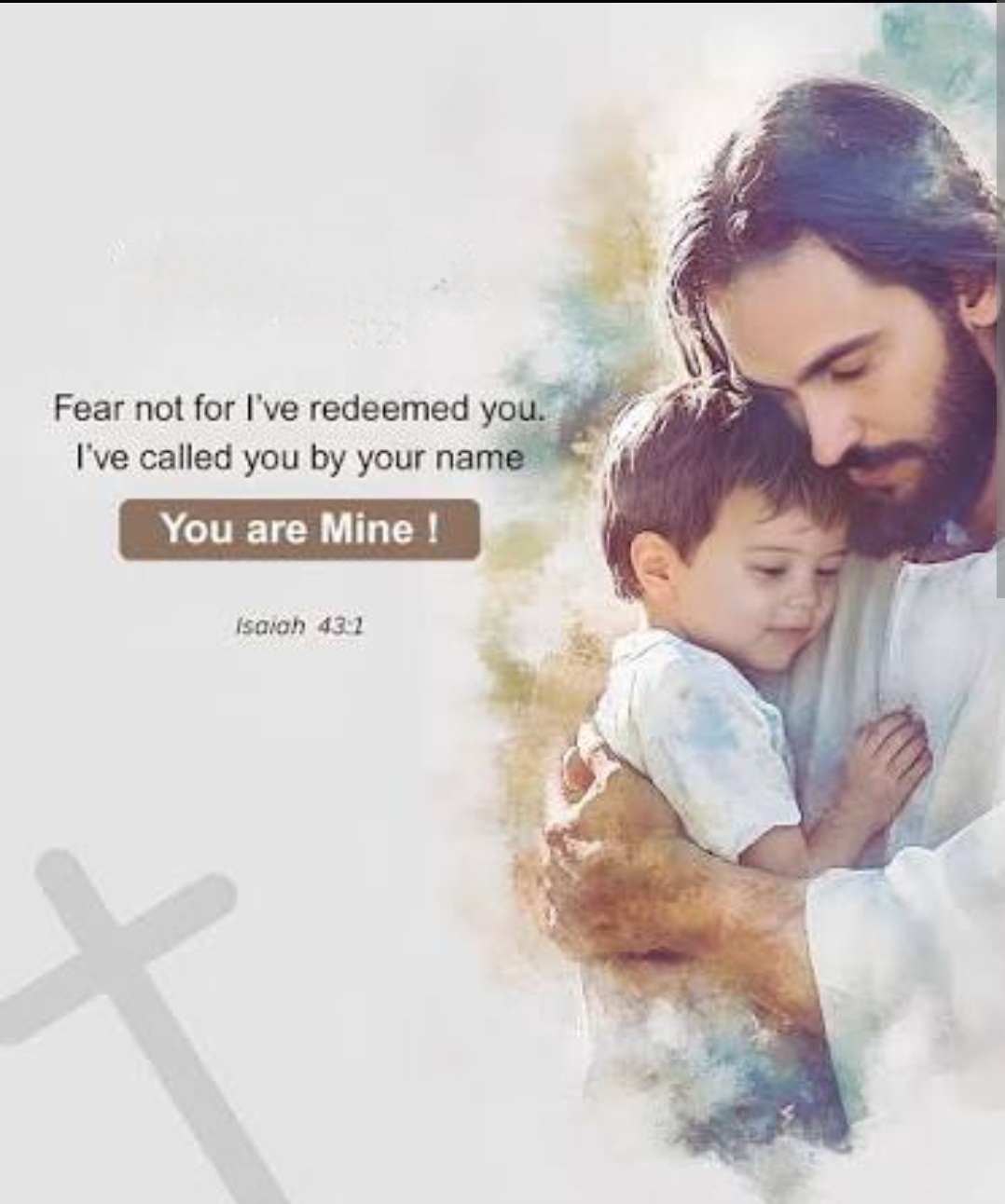
“But now, this is what the Lord says, he who created you, Jacob, he who formed you, Israel: ‘Do not fear, for I have redeemed you; I have summoned you by name; you are mine.'” Isaiah 43:1
Have you ever considered the weight of a word? Words carry a profound power of definition. The words spoken over us, especially in our formative years, have a way of sticking. They become labels. And labels, once affixed, can feel permanent.
Some labels come from our parents, spoken in moments of pain, frustration or disappointment. Jacob was labeled “Deceiver” by the circumstances of his birth. Jabez was labeled “Pain” by his mother’s difficult labour. Some labels come from our tribes, our ethnic groups, our communities. Gideon carried the label of his tribe: “We are the weakest in Manasseh, and I am the least in my family.” He had internalised a collective narrative of insignificance. Still other labels come from our cities, our nations or the systems we work within. Nehemiah carried the label of a conquered people: “Your homeland is rubble. Your God is weak. You are nothing.” The exiled Jews lived under the weight of national shame.
These labels, whether parental, tribal, race, cultural or institutional, are more than just hurtful words. They are identity assignments. They tell us who we are supposed to be, what we can achieve and where we belong. They become self fulfilling prophecies, invisible fences around our potential.
Praise God: he specialises in overwriting human labels with divine pronouncements. What man calls “Deceiver,” God calls “Israel, Prince with God.” What man calls “Pain,” God calls “Honourable, blessed and expanded.” What man calls “Least in the weakest tribe,” God calls “Mighty Warrior.” What man calls “Conquered exile,” God calls “Rebuilder of walls.”
The question at the heart of all of this is simple but life changing: Whose report will you believe?
Before we can receive God’s overwriting pronouncement, we must understand the labels we carry and where they came from. Parents are the first voices in our lives. Their words carry the weight of authority and love, which makes them both powerful and potentially damaging. Jacob was named for his action at birth, grasping his twin brother’s heel. His name, Ya’akov, means “heel grabber” or “supplanter,” one who deceives to get ahead. Imagine growing up being called “Deceiver” by everyone who knew you. It is no wonder Jacob lived down to that name, manipulating his brother Esau out of his birthright and deceiving his father Isaac for the blessing. He became what he was called. Jabez received an even heavier label. His mother named him Jabez, saying, “I gave birth to him in pain.” Every time his name was spoken, it was a reminder: You are my sorrow. Your existence brought me suffering. What does that do to a child’s psyche? What ceiling does that place on a life? These parental labels become part of our core identity, often operating beneath our conscious awareness. We may spend our entire lives trying to prove the label wrong, or worse, surrendering to it as destiny.
Beyond our parents, we are shaped by the communities we belong to, and these collective voices speak with even greater authority because they seem to represent reality itself. Gideon lived under a triple label. His nation, Israel, felt abandoned by God. His tribe, Manasseh, was considered weak. And his family was the least within that tribe. When the angel of the Lord appeared and called him “mighty warrior,” Gideon’s immediate response revealed the label he had internalised: “Pardon me, my lord, but if the Lord is with us, why has all this happened to us? Where are all his wonders that our ancestors told us about? The Lord has abandoned us and given us into the hand of Midian.” Gideon could not even hear his own calling because he was so immersed in the collective narrative of defeat. His tribe’s suffering had become his identity. Tribal and cultural labels work this way, they tell us that people from our town never make it out, that our people do not do that kind of work, that given where we are from, we should be grateful for anything at all.
There are also labels from the institutions and systems we navigate, our workplaces, our countries, even our adversaries. Nehemiah carried the label of a conquered people. He was a Jewish exile serving as cupbearer to a Persian king, and to the surrounding officials, he was nothing, a servant from a destroyed nation with a powerless God. When he dared to return to Jerusalem and rebuild its walls, the mockery came swiftly: “What is this thing you are doing? Are you rebelling against the king?” Sanballat and Tobiah labeled him a traitor, a dreamer, a fool. These institutional labels are particularly powerful because they are backed by systems, hierarchies and histories. They can make us feel small, trapped and permanently defined.
To understand how God overwrites these labels, we must first establish the foundational truth that gives him the authority to do so. Our text this morning is layered with meaning. God’s authority to name us rests on his authority as our Maker, only the One who formed us in the womb knows our true design and purpose. No parent, tribe or institution that came after our creation can overwrite the God’s intent.
The Hebrew word for “formed” implies intentional shaping, like a potter with clay, you are not an accident or an afterthought, but someone deliberately shaped with purpose. His declaration “I have redeemed you” means that his work of salvation is also a work of reclamation, buying back what was lost, including our identity. “I have summoned you by name” is not a generic blessing but a specific naming, He called Jacob “Israel,” He called Gideon “mighty warrior,” and He calls each of us by a name that reflects our true identity. And “you are mine” is the ultimate overwrite. No earthly label can ultimately define someone who belongs to the King of Kings.
God overwriting human labels with divine pronouncements. Jacob’s story is the classic example of identity transformation. For years, he lived under the label “Deceiver,” and he simply became who he was called, scheming, manipulating, outmanoeuvring everyone around him. But on the night before his reunion with his estranged brother Esau, everything changed. Alone by the Jabbok River, Jacob wrestled with a mysterious figure until daybreak, and exhausted and desperate, he cried out, “I will not let you go unless you bless me.” The figure asked him a penetrating question: “What is your name?” By forcing Jacob to speak his name, God forced him to confront his old identity. “I am Deceiver.” It was a confession. And in that moment of broken honesty, God spoke the overwriting pronouncement: “Your name will no longer be Jacob, but Israel, because you have struggled with God and with humans and have overcome.” God took the very tenacity that Jacob had used for deception and sanctified it. The heel grabber became a God wrestler. The deceiver became a prince.
Jabez’s story is shorter but equally powerful. Trapped under the label “Pain,” he could have lived a small, sorrowful life. Instead, he did something remarkable: “Jabez cried out to the God of Israel, ‘Oh, that you would bless me and enlarge my territory! Let your hand be with me, and keep me from harm so that I will be free from pain.’ And God granted his request.” Jabez recognized a higher authority—he did not appeal to his family or tribe to change his name, but cried out to the God of Israel. He asked for the exact opposite of his label, requesting blessing, expansion, presence, and protection from harm. And he believed that God could overwrite the identity his mother had assigned him. The text says simply, “God granted his request.” He is remembered not as “Jabez the Pain” but as “Jabez who was more honorable than his brothers.”
God overwrites tribal and cultural labels. When the angel appeared, Gideon was hiding in a winepress, threshing wheat in fear of the Midianites; a picture of insignificance and terror. Yet the angel’s first words completely ignored Gideon’s reality: “The Lord is with you, mighty warrior.” God did not address Gideon by his tribal identity. He did not say, “Hello, least in the weakest tribe.” He spoke a new identity over him. When Gideon protested and listed all the reasons why this could not be true, God did not argue with him about his tribe’s strength or his family’s status. He simply repeated His pronouncement and added the only qualification that mattered: “I will be with you.” That was the overwrite. Gideon’s tribal label of weakness was irrelevant because God’s presence was the true source of strength. The “least in Manasseh” became the leader who defeated an entire army with just three hundred men.
Nehemiah’s story shows how God replaces national shame with divine purpose. Though he was a Jewish exile serving a Persian king and carried the stigma of a ruined Jerusalem, God gave him a vision to rebuild and granted him favour. When others mocked and labelled him a traitor or dreamer, Nehemiah stood firm in God’s promise of success. He refused to live under the identity of a defeated exile, and through faith and obedience, the walls were rebuilt.
Perhaps as you have read these stories, you have recognised labels you carry, from your parents, your tribe, your city, your workplace, your race, your nation. If so, the first step toward freedom is simply to identify the label. You cannot break what you will not acknowledge. Jacob had to speak his name. Gideon had to voice his tribe’s narrative. Nehemiah had to sit with the reality of Jerusalem’s broken walls and weep. Take time to name the labels you carry; what your parents called you directly or indirectly, what your community believes about itself and about you, what ceilings have been placed on you by your city, country, or employer. Naming the label is the beginning of freedom.
From there, you must recognise a higher authority. Jabez did not appeal to his family to change his name; he cried out to the God of Israel. Nehemiah did not accept the verdict of Sanballat and Tobiah; he looked to the God of heaven. No parent, tribe, city, or employer has the final authority to define you. Only your Creator holds that right. Declare this truth: whatever labels you carry, they do not have the final word.
Author

kay.alli@legalview.co.uk
Related posts
Fought the good fight
“I have fought the good fight, I have finished the race, I have kept the faith.” 2 Timothy 4:7 Paul wrote these...
Read out allThe same truth reveals different hearts.
“I will open my mouth in parables, I will utter things hidden since the creation of the world.” Matthew 13:35 Jesus loved...
Read out allCalled By Your Name
“But now, thus says the Lord, who created you, O Jacob, And He who formed you, O Israel:‘Fear not, for I have...
Read out allUnderstanding Darkened -1
“This I say therefore, and testify in the Lord, that you should no longer walk as the rest of the Gentiles walk,...
Read out all
Justice
“His work is perfect: for all his ways are judgement: a God of truth and without iniquity, just and right is he.”...
Read out all
The Book of Revelation
“These words are faithful and true” Revelation 22:6 There is a promise attached to the Book of Revelation that we often overlook....
Read out all