
God called Jeremiah to speak to a nation that largely refused to listen (Jeremiah 1:4-5). For decades, he proclaimed God’s word, warned of coming judgment (Jeremiah 25:3-7), pleaded with the people to repent, and endured rejection from those he was trying to help. He was mocked, opposed, imprisoned (Jeremiah 20:2; 37:15-16), threatened, and ignored.
Jeremiah found himself in a difficult spot. The people wanted messages of peace and prosperity, but God had given him warnings of judgment and calls to repentance (Jeremiah 6:13-14). Naturally, he became unpopular. He once said, “I am in derision daily, every one mocketh me” (Jeremiah 20:7).
He got discouraged. But here’s the thing — his discouragement didn’t come from disobedience. It came while he was obeying God. We sometimes assume that if we’re experiencing opposition, criticism, or misunderstanding, we must be doing something wrong. Not necessarily. Sometimes, the cost of obedience is misunderstanding.
Obedience doesn’t often produce immediate positive results, and faithfulness is not always appreciated. During Jeremiah’s ministry, there were periods when he stood largely alone (Jeremiah 15:17). He watched people reject God’s warnings repeatedly. He saw false prophets gain popularity while his message was rejected (Jeremiah 23:16-17). He carried a burden that many around him neither understood nor shared.
One of the hardest experiences isn’t physical isolation, it’s feeling that no one understands what you’re carrying. This kind of loneliness can affect anyone: leaders, parents, caregivers, ministry workers, believers trying to live faithfully in difficult environments. Have you ever felt alone in a responsibility, burden, or conviction? What made that season difficult?
In our text this morning, we see Jeremiah bringing his pain before God (Jeremiah 20:7-12). Many believers think faith means never admitting discouragement. Jeremiah demonstrates that faith can include honest lament. There’s a difference between complaining about God and honestly expressing pain to God.
Jeremiah’s story doesn’t end in despair. In the middle of national devastation and personal grief, he writes: “This I recall to my mind, therefore have I hope” (Lamentations 3:21). Jeremiah chose to remember, and that brought hope. He continued: “It is of the LORD’S mercies that we are not consumed” (Lamentations 3:22).
His circumstances hadn’t changed. Jerusalem was still in ruins. The future remained uncertain. Yet Jeremiah deliberately turned his attention to God’s character. His hope was rooted not in circumstances but in God’s faithfulness.
Notice that Jeremiah doesn’t deny his pain. He acknowledges it fully. But he refuses to make it the final truth. His suffering is real. God’s faithfulness is also real.
Lack of immediate results or visible success is not always the measure of God’s faithfulness. By worldly standards, Jeremiah’s ministry appeared unsuccessful. Many people ignored his message. Only a few listened (Jeremiah 1:18-19). Yet God never measured Jeremiah by popularity. God measured him by obedience.
Have you ever tried to help people, serve faithfully, or do what was right, only to feel ignored, misunderstood, or unappreciated? This is a powerful encouragement for anyone serving faithfully in difficult circumstances. Parents may not immediately see results. Church leaders may not immediately see growth. Believers sharing their faith may not immediately see fruit. God calls us first to faithfulness.
Despite his struggles, Jeremiah remained faithful to the assignment God had given him (Jeremiah 42:4).
What truths about God help you maintain hope during difficult seasons? And how can the church become a safer place for people to express discouragement honestly?
Jeremiah teaches us that faithfulness is not the absence of discouragement. Faithfulness is continuing to trust God when discouragement comes. He experienced rejection, loneliness, disappointment, and sorrow. Yet in the midst of his struggle, he declared: “Great is thy faithfulness” (Lamentations 3:23).
Author

kay.alli@legalview.co.uk
Related posts

From Anonymous to Known
The Lord appeared to Saul on the road to Damascus and dramatically changed his life. Yet his integration into the community of...
Read out all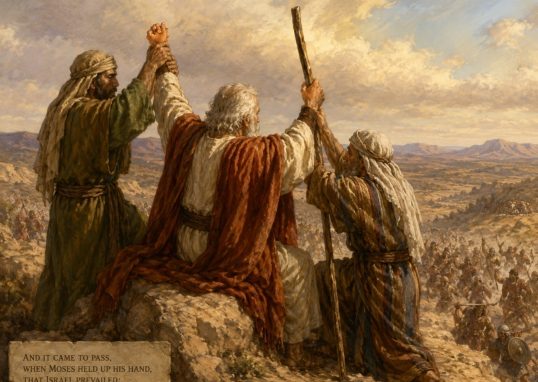
Burden-Bearing
“Bear one another’s burdens, and so fulfill the law of Christ.” Galatians 6:2 This morning, I pondered the story in Exodus 17....
Read out all
As we are fully known
“And you shall know the truth, and the truth shall make you free.” John 8:32 The Samaritan woman in John 4 came...
Read out all
The one who sees
“When Jesus reached the spot, he looked up and said to him, ‘Zacchaeus, come down immediately. I must stay at your house...
Read out all
Freedom from the Inside Out
Christ accomplished what no human effort could. Romans 8:3-4 declares that God sent his Son “in the likeness of sinful flesh, on...
Read out all
From Bethel to Peniel
As we continue on our series on Isaiah 43:1-7 on Wednesday, we considered Christian responsibility and commitment to personal spiritual growth. We...
Read out all